Exclusive | Inside New York’s medical fraud capital where often empty senior centers bill Medicaid $100M-a-year for patients
The vibrant, east Asian immigrant enclave of Flushing may be New York’s medical fraud capital.
Read more NYPD cop, mom of three dies after boob job in Dominican Republic, family demands malpractice probe
A one-mile radius of the neighborhood boasts 77 Social Adult Daycares (SADCs), which bill Medicaid over $100 million a year, accounting for 14 percent of all daycare spending in the state, a Post investigation reveals.
When The Post visited some of largest — which are private businesses that have claimed between $20 and 40 million from Medicaid over the last six years — many storefronts were shuttered, and those that were open had empty rooms with no patients.
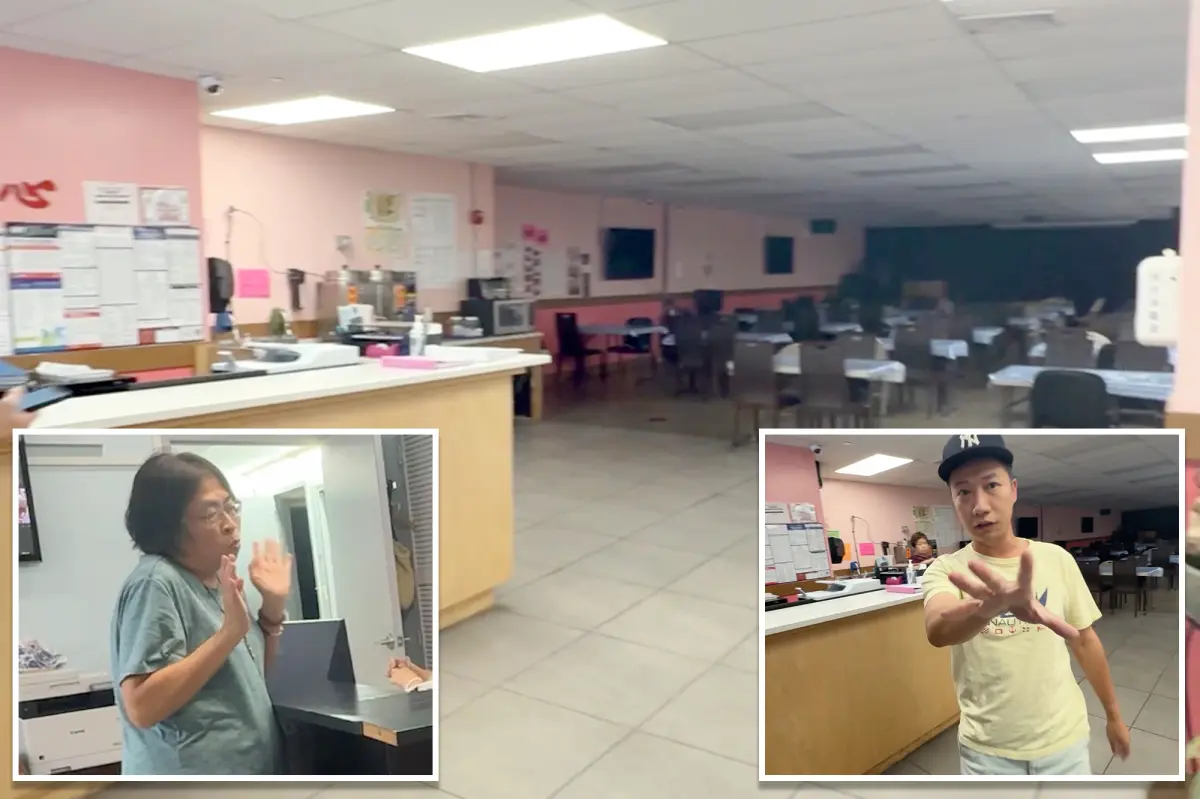
At Livingwell Day Care on Northern Boulevard, lights were dimmed over rows of empty tables in a mess hall near the entrance. No seniors appeared to be inside, but Livingwell billed Medicaid $27 million from 2018-2024 and had over 26,500 patients, according to federal data.
A man at the front desk refused to answer questions, chased a reporter and cameraman out and threatened to call police. The facility has not been implicated in any crimes.
A woman who identified herself as Wendy, a care worker at Bao Kang Adult Day Care on Blossom Avenue, told The Post she has one or two hundred patients a day, but said “I don’t know” when asked about the $32 million billed to Medicaid for serving 43,900 unique patients during the same years.
Wendy denied The Post a tour, but a security monitor behind her desk displaying common areas showed every single one was empty.
Since The Post’s initial expose on New York’s SADC abuse in January and a federal bust in February saw two men charged with ripping off $120 million over 10 years from Medicaid using two SADCs they owned, workers have been on high alert. Entrances are locked during business hours, while windows are covered in perforated vinyl wrap.
At Merry Adult Day Care on 35th Avenue — which billed $25M from 31,500 patients during the six-year period — a masked worker poked her head out of the door, wouldn’t answer any questions and asked The Post to leave.
Kang Hua on Main Street billed $22 million for 25,800 unique patients; Greater New York Social and Health on Maple Avenue billed $28 million for 32,500 patients; Evergreen Adult Day Care on Roosevelt Avenue took in $32 million for 57,500 patients and Sunrise Senior Service billed a whopping $45 million for 56,800 patients.
None of these facilities have been accused of fraudulent behavior.
However, corruption and kickbacks are the norm, according to those who work in the area.
“Seniors come in and ask, ‘Do you have any benefits for me?’” Kenny Chan, owner of a local pharmacy, told The Post, using the local euphemism for illegal kickbacks, where seniors get a small cut of the amount the pharmacy or SADC is billing back to Medicaid.
“I say, no, we don’t do that here. I’ve lost so much business. I’ve had to pull money out of my own pocket to keep the business going.”
To illustrate the point, Chan — who didn’t have a single customer during a 30-minute conversation with The Post — pointed down the street to another pharmacy he claimed was a fraud site.
That tiny storefront was a hive of activity, packed with seniors and three or four workers bustling around with clipboards. Chan said there’s often a line down the block to get in.
“The new pharmacies, the ones that have been here five or 10 years, they offer a lot of ‘benefits.’ About 60 or 70 percent of them have a connection with the daycare centers,” he said. “If I did that, I would be very busy.”
For Chan, it’s not just local grannies who’ve pestered him about joining the hustle. He said daycare workers, other pharmacists and even doctors have approached him asking if he’d like to jump on the gravy train.
“I want them out. I’m waiting for the day they get shut down. It’s not legal. It’s crazy,” he said.
An investigation by The Post found seniors in a typical scheme get $500-$1000 a month in daycare kickbacks while the facility pockets upwards of $3,000 a month per patient.
According to city and federal data, Flushing’s SADCs billed a total of $733M from 2018-2024, the latest year for which spending figures are available.
Confusion about the role of SADCs and what they are there to provide is one of the reasons most people turn a blind eye to them.
As part of Medicaid’s Managed Long-Term Care (MLTC) program, SADCs are intended to be exclusively for seniors with a “chronic illness or disability” who are “clinically-eligible” for “nursing home level of care,” or experience memory issues like Alzheimer’s disease or require “assistance with physical maneuvering [during] daily living,” such as to eat or bathing, according to the NYS Department of Health.
A spokesperson for the NYC Department of the Aging further clarified, telling The Post: “There are important distinctions. [Senior center] membership is open to all New Yorkers ages 60 and older. [They] serve meals, and in-person and virtual activities are designed to meet the needs of their members.
“SADC’s serve adults with functional impairments and need a higher level of care than [senior centers] can provide.”
However, that was not the case for dozens of SADCs visited by The Post earlier this year, where the facilities were indistinguishable from city-run senior centers, which are not a part of Medicaid.
Healthy, active seniors played ping-pong and mahjong, rode stationary bikes, and got lunch delivered from local restaurants — all on the taxpayers’ dime.
SADC workers, patients and even local politicians who spoke to The Post were unaware of the difference between senior centers and daycares.
New York State Sen. John Liu, who represents Flushing, blamed a lack of city facilities in the district.
“You come to Flushing, you cannot help but see a preponderance of older residents, older Asian residents. And with that concentration, for there to be only one senior center in downtown Flushing, that speaks to the lack of resources, which perhaps all these centers have sprung up in order to fill the void of,” he told The Post. “I think it would be misguided to paint all of these centers with the same brush and to paint Flushing as the epicenter of this kind of fraud, if it exists.”
However, Centers for Medicare and Medicaid Services (CMS) Administrator Dr. Mehmet Oz blasted New York officials for allowing fraud to fester, where the state’s $115 billion a year Medicaid spend is by far the highest per-person in the nation.
“Due to a lack of proper state oversight, these centers have become cash cows for criminal syndicates, who use kickbacks and other illegal practices to steal millions from Medicaid. When Flushing, Queens, alone accounts for roughly 14% of all social adult daycare spending in New York state, it’s pretty obvious that these centers aren’t popping up solely to fulfill a legitimate need in the community,” he told The Post.

Related Posts

NYPD cop, mom of three dies after boob job in Dominican Republic, family demands malpractice probe

Exclusive | Naked nutjob in miracle jump off Brooklyn Bridge is Kazakhstan activist who plotted plunge on birthday: roommate