Tesla on autopilot halts on busy highway before giant F-350 truck rear-ends and kills driver
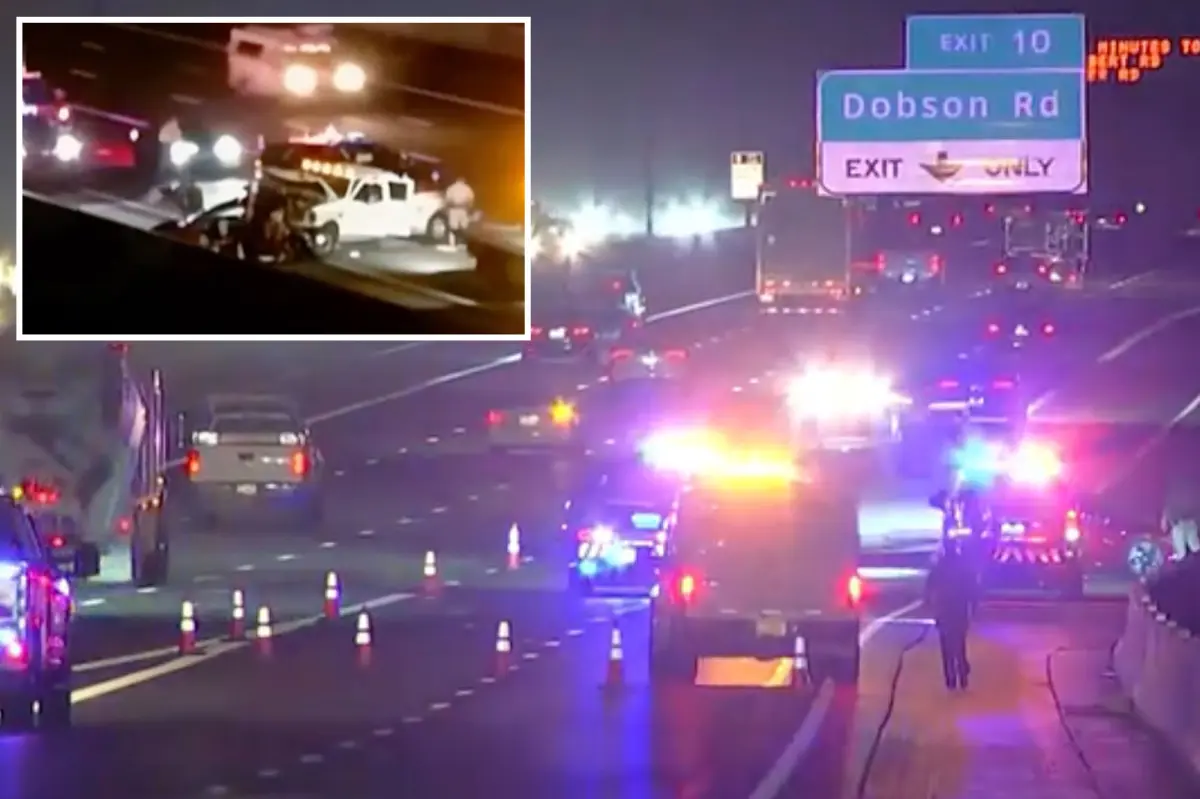
A Tesla fatally rear-ended by a pickup truck in a late-night crash on an Arizona highway had stopped dead in the middle of the road while operating on its controversial “self-driving” mode, new filings show.
The 2020 Tesla Model 3 was traveling on the eastbound Loop 202 in Mesa around 3 a.m. on October 31, 2025 when it inexplicably came to a halt on the freeway.
The electric car was slammed into from behind by a massive Ford F-350 pickup truck and the Tesla driver died at the scene, Arizona’s Family (KPHO/KTVK) and 12News had reported at the time of the crash.
Initial local reports omitted any mention of automated tech but redacted filings submitted by Tesla to the National Highway Traffic Safety Administration (NHTSA) revealed the technical glitch that took the driver’s life.
According to Electrek, the crash report confirmed that an automated driving system, either Tesla’s standard Autopilot or its pricey “Full Self-Driving” (FSD) software, was “verified engaged” during the lethal collision. The car’s pre-crash movement was also listed as “stopped – 0 mph.”
A few weeks ago, another Model 3 running on Tesla’s driver-assist software had stopped in the middle of a Florida highway before a fatal rear-end smash that killed the driver, the news outlet reported.
Tesla holds all the critical data from a vehicle, including video, telematics and the event-data recorder, which could easily explain why the car stopped.
However, the company redacted the three key fields that would provide answers: the crash narrative, the software version, and whether the vehicle was within its approved operating area, Electrek reported. Tesla labeled this data “confidential business information,” a tactic that the company applies to 99.9% of its crash reports.
Tesla has long been plagued by “phantom braking” glitch where its vehicles slam on the brakes for non-existent obstacles. The NHTSA had officially opened its preliminary investigation into Tesla’s “phantom braking” on February 16, 2022 after a surge in consumer complaints of rapid deceleration at highway speeds while using Autopilot or adaptive cruise control.
The four-year probe came to a close in July 2026 after the agency noted sharp drop-off in incident reports and finding no underlying mechanical brake defect or unreasonable collision risk
Read more Lindsay Clancy’s lawyer irate as he fights for juror to be removed

Related Posts
Hate crimes surge in NYC — with over half targeting Jews, NYPD stats show

‘American Idol’ star Antonella Barba arrested for allegedly shoplifting from NJ Target