Mentally ill attacks will keep happening around our city without NYPD funding
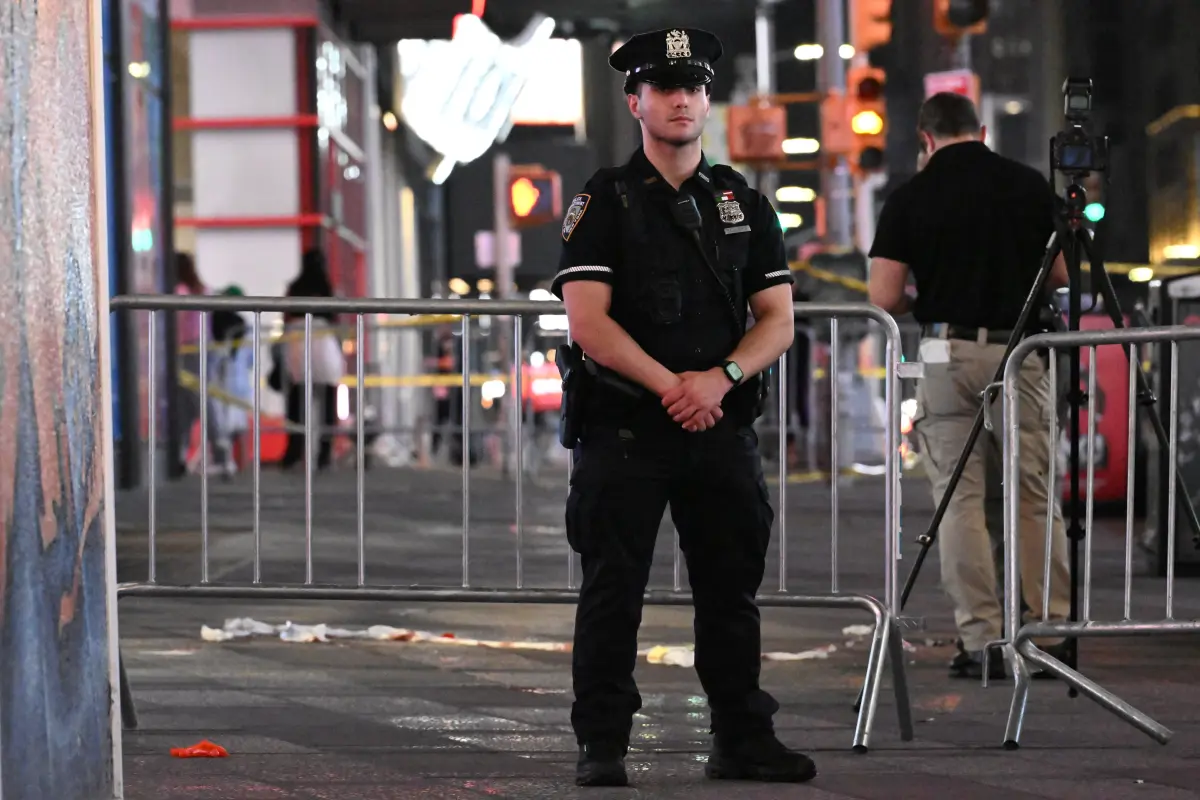
Monday’s unprovoked knife attack in Times Square was “a tragedy that will not soon be forgotten,” says Tom Harris, head of the Times Square Alliance.
Read more The surprising reasons why Tasers didn’t stop crazed Times Square stabber
Sadly, he’s probably mistaken.
How well do New Yorkers remember April’s machete-slasher episode in Grand Central, or the stabbing of seven individuals in Penn Station in June?
This city has a way of moving on from even the most horrific tragedies — and fast.
Both of these incidents involved perpetrators with untreated serious mental illness, as did Monday’s.
Getting these individuals adequate treatment is therefore imperative.
Without it, NYPD officers are forced to step in to keep New Yorkers, and the mentally ill themselves, safe.
City Hall certainly forgot all that last budget season.
Understaffed
The fiscal year 2027 executive budget was published May 12, just 31 days after April’s incident, and five days after an unstable Bellevue Hospital-discharged psych patient allegedly pushed a 76-year-old fatally down subway steps.
Yet the budget proposed no new funding for serious mental illness — and in Mayor Mamdani’s executive order creating the Office of Community Safety, serious mental illness is not mentioned.
In June, within a month of the Penn Station stabbings, the city adopted its budget and kept the NYPD’s funding essentially flat.
No officer headcount could be added, despite Police Commissioner Jessica Tisch’s hopes to hire 550 officers by year’s end.
Multiple random attacks by people with untreated serious mental illness occurred, caused casualties — and were forgotten while the budget was being considered.
That doesn’t inspire much confidence that Monday’s tragedy will be any different.
It could be: One of the best ways for the city to address random violence is to fund the NYPD.
NYPD officers are exceptionally good at responding to untreated serious mental illness.
Read more Putin vows to support Iran and resist US sanctions after meeting with regime leader
This week’s shooting was statistically rare: Officers respond to over 170,000 “emotionally disturbed person” calls annually, and police resolve 99% of incidents with no force whatsoever.
In the 1% of cases where force is used, it’s overwhelmingly nonlethal.
As Monday demonstrated, when lethal response is used, it’s overwhelmingly necessary.
Meanwhile, in cases of force used against NYPD members, EDP incidents are the second most common.
Officers are putting themselves in harm’s way to protect New Yorkers; the least the city can do is hire more of them.
Officers also initiate involuntary transports, bringing individuals who are a danger to themselves or others — like Monday’s attacker — to hospitals for treatment, rather than jail.
Money where mouth is
Officers have initiated over 2,600 such transports since January, five times the number initiated by clinicians.
The NYPD is facing a staffing crisis: The city had roughly 33,832 uniformed officers as of late 2025 and lost an average of 316 officers per month from retirements and resignations.
Even Mamdani has had to recognize that his Office of Community Safety can’t use mental health workers in all scenarios.
“I want to thank the NYPD officers who stepped in and prevented a horrific attack from becoming even worse,” Mamdani said during a press briefing on Monday.
“This is what the men and women of this department do every single day to keep our city safe.”
The mayor — and the City Council — should remember that observation come November, when next year’s budget cycle begins, and come the fiscal year 2028 preliminary budget in January.
But given how past incidents have been remembered, New Yorkers probably shouldn’t hold their breath.
Read more Newly single AOC reveals if being a Republican is a dating dealbreaker
Carolyn D. Gorman is a fellow at the Manhattan Institute.