Lindsay Clancy jury says they are deadlocked, judge tells them to continue deliberations
PLYMOUTH, Mass. – Jurors in Lindsay Clancy’s murder trial announced Tuesday that they are deadlocked — but the judge sent them back to deliberate more.
Read more Disturbing details emerge after TCU receiver rushed to hospital in alleged locker room attack
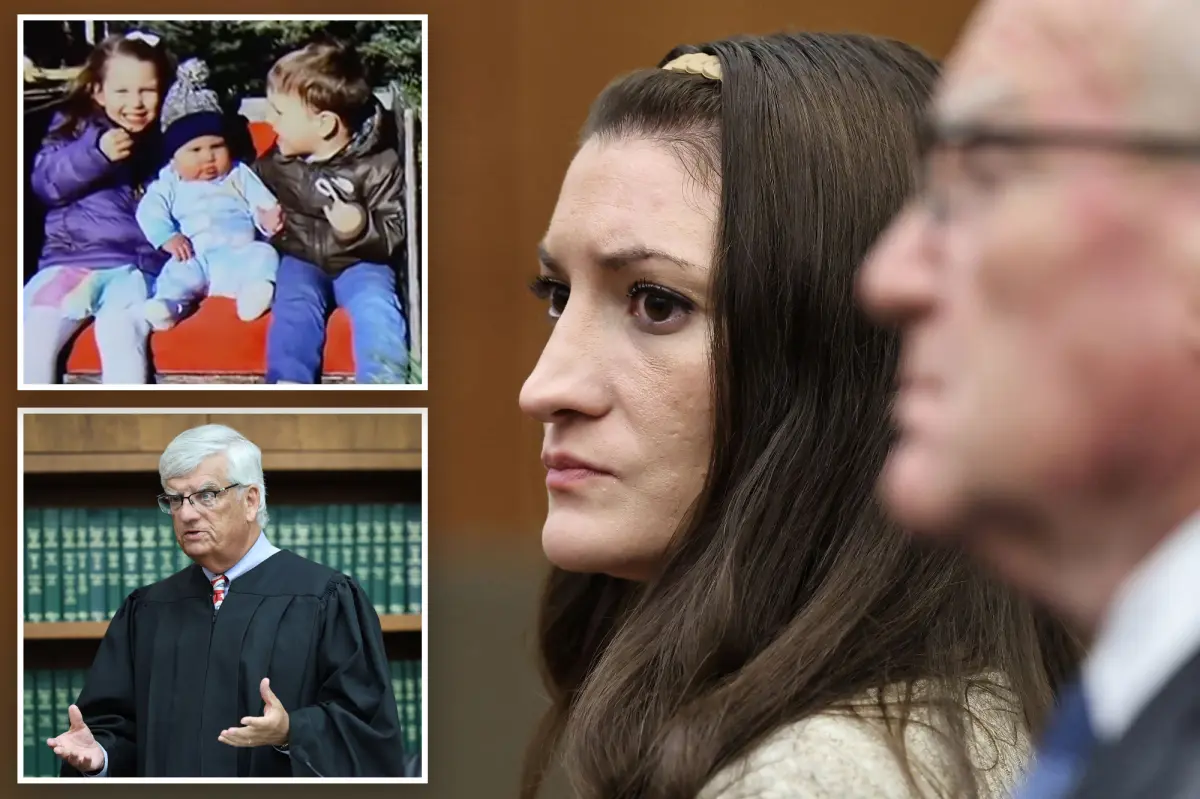
The 12-person jury – made up of nine women and three men – told Judge William Sullivan that they could not agree on whether to convict Clancy, 36, of three counts of first-degree murder after almost 18 hours of deliberation.
“I’ve got your question and the question is: ‘After many hours of deliberation we are unable to come to a unanimous decision’,” the judge said.
“I brought you back out because I know that this was a long trial. I know there were over 80 witnesses, there were over 300 exhibits, but because of that I’m going to ask you to go back out, keeping in mind all of the instructions that I gave you, to go out and continue your deliberation at this time.
“So with that … I would ask you to resume your deliberations at this time,” he told jurors.
Two Massachusetts veteran criminal defense attorneys said if the jurors tell Sullivan again at some point that they still can’t reach an agreement, the judge would then give them a formal instruction called a “Tuey-Rodriguez” charge, telling them again to try to come to an agreement.
Follow The Post’s live updates on the Lindsay Clancy trial
Boston attorney Peter Elikann said the Tuey-Rodriguez charge is “known colloquially as the dynamite charge… And it really pushes the jury and urges them to try to work out a unanimous decision. It’s almost equivalent to a pep talk by the judge encouraging them to go back and try harder.”
And if the panel still can’t reach a verdict after that, Sullivan could choose to declare a mistrial.
“It depends on who the judge is, but normally once Tuey has been given, if they come back again and say they are still deadlocked, the judge is constrained to grant them a mistrial,” Boston lawyer Brad Bailey told The Post.
“I’ve got your question and the question is after many hours of deliberation we are unable to come to a unanimous decision,” the judge said.
“I brought you back out because I know that this was a long trial. I know there were over 80 witnesses, there were over 300 exhibits, but because of that I’m going to ask you to go back out, keeping in mind all of the instructions that I gave you, to go out and continue your deliberation at this time.
“So with that I’m going to go back out like I said, keep in mind the instructions I gave you reviewing the evidence and I would ask you to resume your deliberations at this time,” he told jurors.
The note from the jury came after they heard dueling accounts of the mom’s state of mind when she fatally strangled Cora, 5; Dawson, 3, and 8-month-old Callan using exercise bands before trying to take her own life on Jan. 24, 2023.
Here’s the latest on Lindsay Clancy’s trial for allegedly murdering her three children:
- Jurors do not reach verdict after 17 hours of deliberations with Clancy trial set to continue tomorrow
- Follow The Post’s live updates on the Lindsay Clancy trial
- Lindsay Clancy’s lawyer labeled ‘feminist icon’ by her fawning fans: ‘Voice of so many moms’
- Lindsay Clancy trial consumes tight-knit Massachusetts town where degrees of separation are slim
- Shrink who got into testy exchange with Lindsay Clancy’s lawyer while on the stand is ‘no longer employed’
Defense lawyer Kevin Reddington argued that Clancy was in the throes of postpartum psychosis, worsened by a myriad of prescription medications, and had hallucinated a man’s voice inside her head instructing her to kill the children and herself.
Prosecutors countered that she was in her right mind and had carefully planned the killings, including getting her then-husband, Patrick, to pick up medication at CVS and take-out from a local restaurant so that she could be alone with the children in their Duxbury home.
Both sides rested their cases after a total of 21 days of testimony, which began with Lindsay Clancy’s ex-husband, Patrick Clancy, taking the stand as the first witness last month.
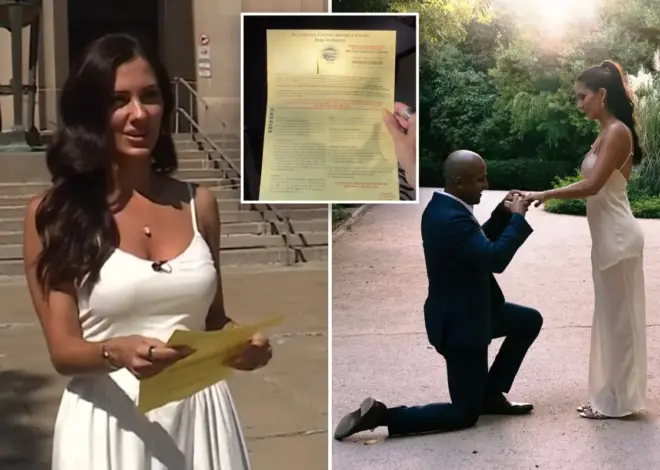
Patrick Clancy — who has since moved to New York City and remarried infertility specialist Rachel Danis — told jurors that Lindsay Clancy repeatedly sought help for her worsening mental state in the months leading to the killings.
She began seeing a psychiatrist, called a suicide hotline twice, checked herself into a mental institution for five days and sought help from two perinatal clinics – but still, she “kept getting worse and worse,” Patrick Clancy testified, and said Lindsay Clancy had even opened up to him about having thoughts of harming the kids.
Lindsay Clancy’s “big spiral” was further fueled, according to Patrick Clancy and Reddington, by at least 13 psychiatric medications prescribed to her by five separate providers from November 2022 up until a day before the murders, including drugs for anxiety, depression, sleep disorders and anti-psychotic meds.
Patrick Clancy hauntingly recalled returning to the family’s home to find Lindsay Clancy in the backyard with slits on her wrists and throat after plunging from a second-story window — before racing inside and discovering his three children dead in the basement.
“She killed the kids,” the father could be heard screaming during the 911 call played for jurors.
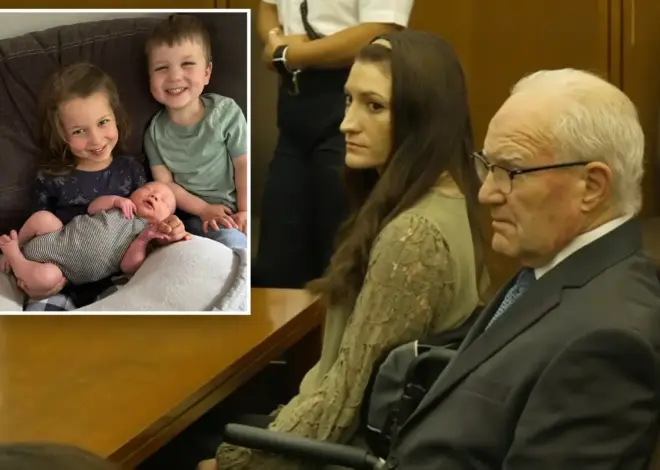
Lindsay Clancy, who attended the trial in a wheelchair after becoming paralyzed from the waist down, repeatedly broke down in tears during the harrowing testimony.
She was seen sobbing as the 911 call played, jurors were shown family photos and video from happier times, while the children’s pajamas and the exercise bands she used to strangle them were presented in court, and while a medical examiner testified about the autopsy she performed on baby Callan.
Other family members, including Lindsay Clancy’s ex-mother-in-law, mother and sister, testified about her historically joyful and capable personality devolving after Callan’s birth, when she was struggling with crippling insomnia, depression and anxiety about going back to work after her maternity leave expired.
But prosecutors maintained that Lindsay Clancy’s behavior showed planning rather than psychosis, and claimed that she “manipulated” the healthcare providers who treated her.
“Lindsay made a calculated decision. She was a woman who no longer liked the life she thought she wanted. It was getting harder and harder for her to control and when she saw the opportunity to escape, she made the selfish choice to take it,” Plymouth County prosecutor Shanan Buckingham said during opening statements.
“She chose to manipulate her providers, seeking out a quick and easy fix when she was feeling depressed and anxious. And when she didn’t get what she expected, she chose the alternate route.”
Eventually, “She made a choice, a deliberate and intentional decision, that she did not want to try anymore. And because no one could take care of her kids the way she wanted them to, she had to take them with her too,” Buckingham told jurors.
Testimony also revealed that the mom had made a series of disturbing Google searches – including “How to slit throat to die” — in the days and weeks leading up to the killings.
Psychologists called to testify, meanwhile, shared contradictory evaluations about Lindsay Clancy’s mental state and hallucinations.
Renowned psychiatrist Dr. Phillip Resnick — a defense witness — claimed the command voice forced Lindsay Clancy into the killings and that she could not be held criminally responsible for what she did that day.
“It was almost like she was a puppet and someone was pulling the strings,” he said.
He claimed she had a “distorted” belief that she was doing the kids “a favor” by taking them with her when she killed herself.
But three rebuttal prosecution experts all said Lindsay Clancy’s behavior demonstrated she knew what she was doing was wrong.
Dr. Gregory Saathoff, a prosecution expert and forensic psychiatrist, testified there were “inconsistencies” in Lindsay Clancy’s account of when the voice kicked in and differences between her and Patrick Clancy’s account of the sequence of events that day – raising questions about if she was telling the truth.
The doctor claimed Lindsay Clancy was “methodical, quite controlled and organized” during the crimes.
The case put a national spotlight on issues surrounding mental illness and postpartum experiences among mothers, with many Lindsay Clancy supporters – the majority of whom are women – even showing up to court wearing pink T-shirts and arguing that she should not be found criminally liable of the murders.
Other demonstrators advocated for Lindsay Clancy to be found guilty, and showed up to court with signs demanding justice for “the only innocents: Cora, Dawson and Callan.”
Read more Pat Cash, former Wimbledon champ, engaged to singer at 61 years old

Related Posts
Lindsay Clancy verdict watch live updates: Killer mom’s lawyer reveals whether he’d stick with her in case of mistrial

Benjamin Netanyahu’s son evacuated from the US over ‘significant’ threat — after Israeli leader warned of Iran plot