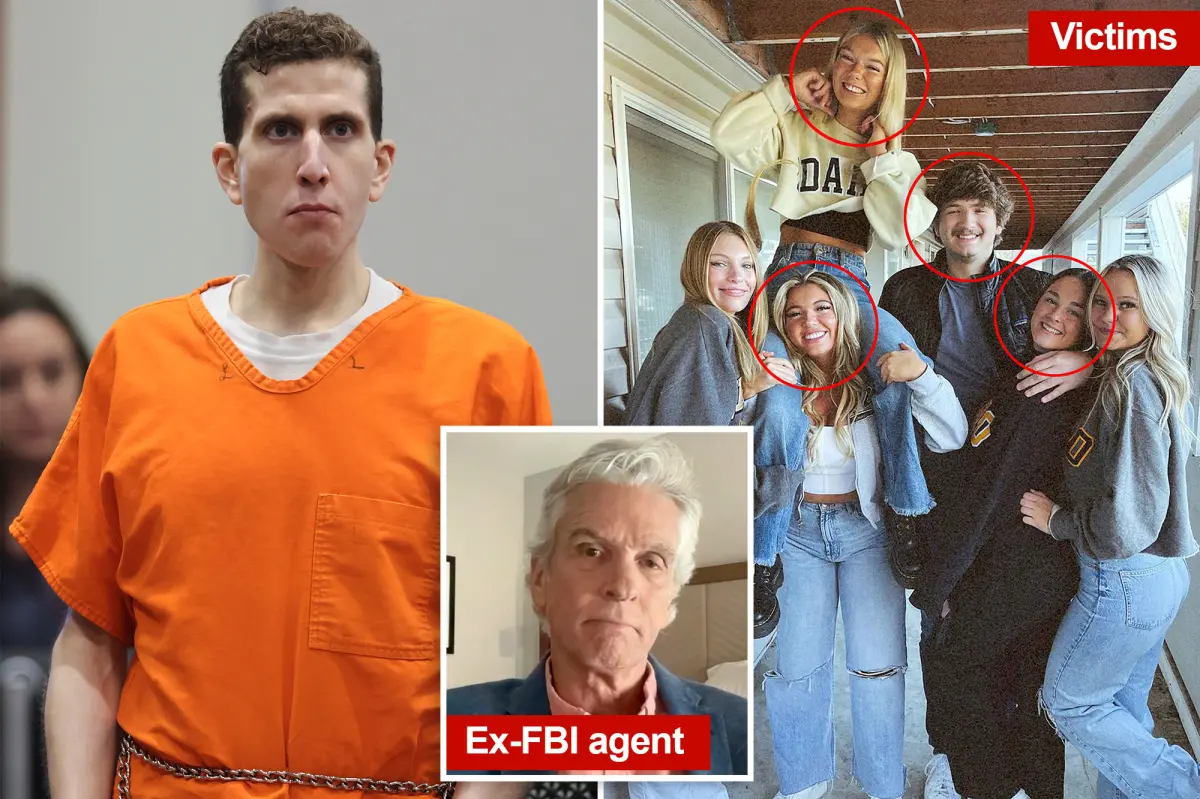
Exclusive | The biggest unanswered questions in University of Idaho slayings after Kohberger plea, according to ex-FBI agent
Bryan Kohberger’s plea deal left several burning questions unanswered about the final moments of the four University of Idaho students he butchered to death, an ex-FBI agent said in the latest episode of “Pod Force One.”
Read more US says it has begun new wave of strikes on Iran
Chris Whitcomb told “Pod Force One” host Miranda Devine that a vacuum of evidence was left behind in Kohberger’s quadruple homicide case when the convicted killer took a plea deal last July — dodging a much-anticipated trial and skirting the death penalty.
Whitcomb’s book, “Broken Plea: The Explosive Search for the Truth Behind the Idaho Murders,” released in late April, details the overlooked inconsistencies in the November 2022 murders through court records, investigative timelines and witness statements.
Among the questions that remain in the closed case was how Kohberger, now 31, managed to enter the off-campus home in Moscow and brutally knife Kaylee Goncalves, Ethan Chapin, Xana Kernodle, and Madison Mogen to death within the timeframe of five minutes.
“The timeline, depending on what the prosecution says at any given time during the course of this, is probably somewhere less than five minutes, maybe less than four minutes, and that’s pretty hard to understand,” said Whitcomb, who spent 15 years as an elite FBI Hostage Rescue Team Sniper.
“So, you ask those questions, he went into the house, he went to the third floor, he found two women in bed, committed two horrific murders, went downstairs, went to another part of the house, committed two more horrific murders, somehow got back to his car, drove his car around, ” Whitcomb said.
The former agent, who also penned the 2001 book “Cold Zero,” also raised questions about a lack of blood or DNA inside Kohberger’s car or apartment.
“If all of this happened in less than four minutes, and this person is soaked in blood from these horrific crimes, how did he get out of the house? He tracked it [blood] all over the house, how once he left the house, was it not found anywhere outside?” Whitcomb asked.
He said the anomaly is only explainable if the former Ph.D. criminology student had somehow ditched his clothes and gotten into his car naked.
Whitcomb also claimed that Chapin, 20, was found with hair in his hand that did not appear to match Kohberger’s.
“When Ethan died in bed, he had human hair … in what appeared to be a closed fist that had relaxed slightly,” Whitcomb described.
Read more Health care socialism is transforming America’s workforce — for the worse
“They found it to be about six inches in length, and that it was dark blonde, light brown with reddish tint. Bryan Kohberger’s hair doesn’t fit any of those characteristics.”
More of the same hair was found by a defense expert in blood on a bedframe two years after the murders, he said.
“It was never even taken as evidence by authorities and tested at all, ever,” the intelligence expert alleged.
Every week, Post columnist Miranda Devine sits down for exclusive and candid conversations with the most influential disruptors in Washington on ‘Pod Force One.’ Subscribe here!
Whitcomb also said it appeared that blood on the walls in the hallway of the home had been diluted, but not in the bedrooms.
“I think there’s compelling evidence that somebody cleaned up, altered the crime scene, because I don’t know any other way to explain that amount of blood over that large an area just mysteriously being diluted with an unknown substance,” he said.
Without a trial, much of the forensic evidence in the case was never fully contextualized or challenged, Whitcomb said.
“We lost all hope of knowing about his [Kohberger’s] motive, his means, the mechanism of the crimes, the location, or even the description of the murder weapons,” Whitcomb told Devine.
“It’s a very complex case. It’s not open and shut.”
Kohberger is serving four life sentences without the possibility of parole at the Idaho Maximum Security Institution.
Neither Kohberger’s defense attorney nor the Latah County Prosecuting Attorney’s Office immediately responded to The Post’s request for comment.

Related Posts
Trump announces ‘biggest oil deal in world history’ with Venezuela to secure 65 billion reserve barrels
Judge axes Khalid Sheikh Mohammed’s confession in long-delayed 9/11 terror case — in major blow to feds