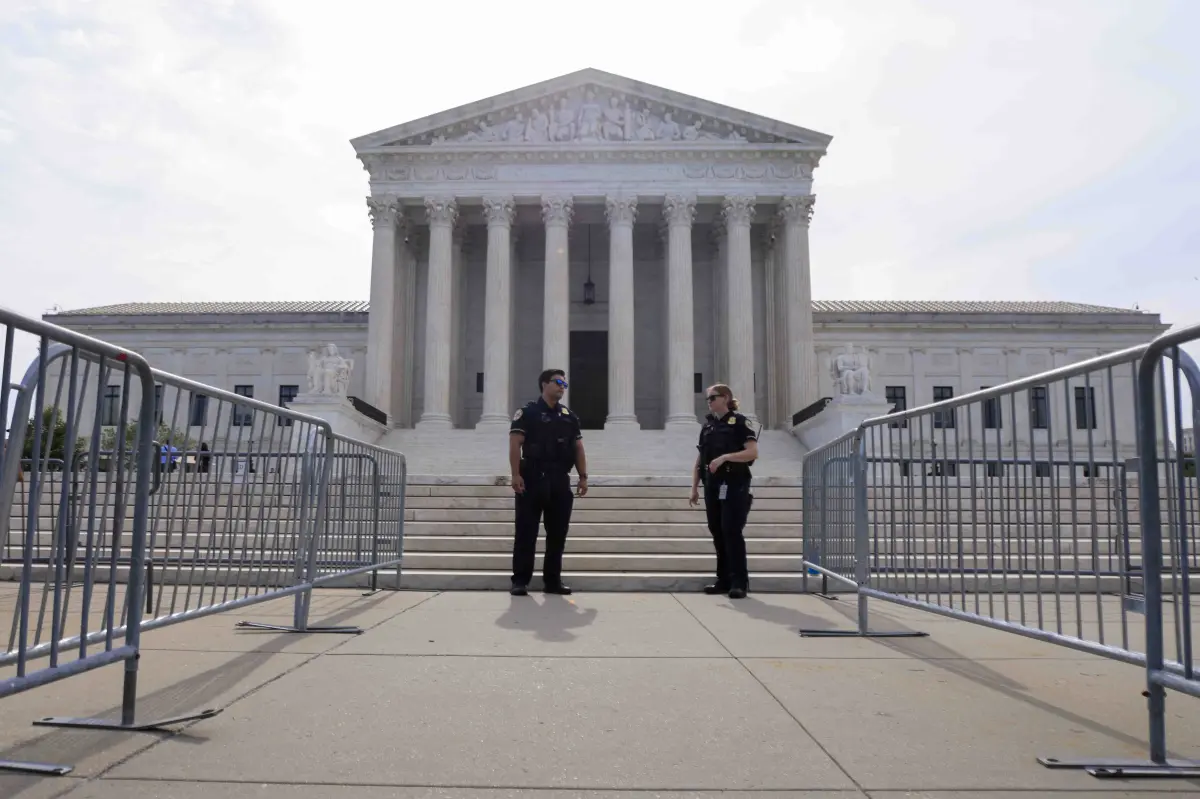
Supreme Court strikes down Hawaii law requiring permission to carry guns in stores and hotels
WASHINGTON — The Supreme Court struck down a Hawaii law requiring people to get permission to carry guns into stores and hotels on Thursday, in its latest opinion backing Second Amendment rights.
Read more Supreme Court rules Trump can remove deportation protection from Haitians, Syrians
The high court’s 6-3 decision means people can carry guns onto privately owned property like shopping malls and gas stations, unless the owners specifically say guns are banned at their establishments. It comes shortly after the court found that marijuana users can’t be completely banned from owning firearms.
It’s a win for President Donald Trump’s Republican administration, which argued the law violates the Second Amendment. The measure was sometimes referred to as a “vampire rule” because it required people with guns to get permission to enter, like vampire lore says, bloodsuckers need an invitation to enter a home.
Hawaii argued that the 2023 measure ensured private owners could decide whether they wanted firearms on their property.
The state passed the law as thousands more people got legal permission to carry guns in the wake of a 2022 Supreme Court ruling that found the Second Amendment gives most people the right to have guns in public.
About four other states have enacted similar laws, though presumptive restrictions for guns on private property open to the public have also been blocked elsewhere.
Read more Supreme Court rules Trump can turn back asylum seekers at US border in major immigration win
Hawaii also restricts guns in places like parks, beaches, and restaurants that serve alcohol, but those rules weren’t challenged before the court. They are being challenged in lower courts, however.
The suit before the Supreme Court was filed by a gun rights group and three people from Maui. A judge originally blocked the measure, but an appeals court allowed it to be enforced.
Trump’s Republican administration backed the Supreme Court appeal.
It’s one of two gun cases on the docket this term. The other is over whether people who regularly use marijuana and other drugs can legally own guns.
They’re the latest in a series of gun cases that have come before the Supreme Court in the wake of its 2022 ruling that led to a flood of challenges to firearm restrictions around the country.
The justices have since struck down a ban on bump stocks, gun accessories that enable rapid firing, but upheld a federal gun law intended to protect domestic violence victims as well as strict regulations on firearms known as ghost guns, which are nearly impossible to trace.

Related Posts

Indian national allegedly killed Arizona girlfriend, arrested at Germany airport as violent history surfaces
Eric Swalwell leveraged past relationship with Katie Miller to hide embarrassing files on honeypot Chinese spy: report