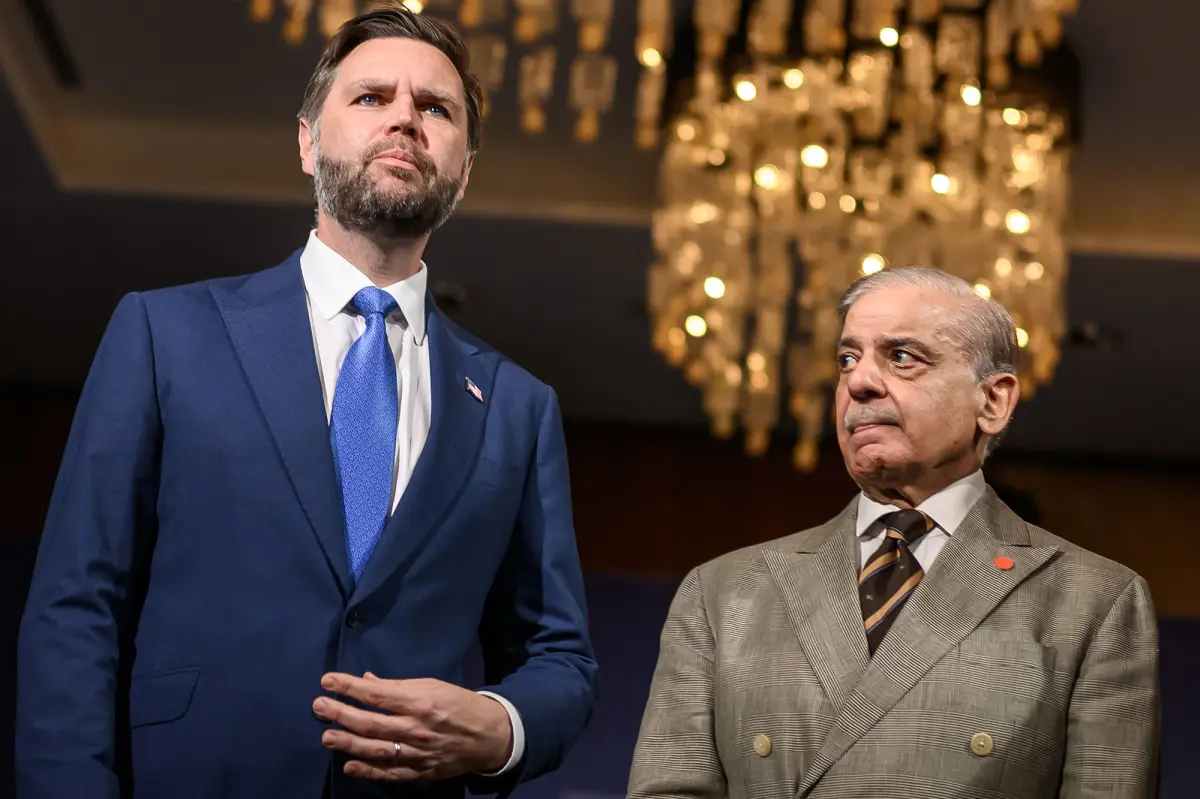
US, Iranian negotiators agree to ‘deconfliction cell’ for Lebanon in hopes of ending ‘military operations’
American and Iranian negotiators agreed Sunday to establish a new “deconfliction cell” for Lebanon in hopes of ending military actions there after days of contradictory statements, confusion over cease-fire terms and mounting fears that a single misunderstanding could reignite fighting in the region.
Read more Italian vacations are bellissima — until it’s time to say ‘Ciao!’
Tehran and Washington agreed to create a “de-confliction cell” involving the United States, Iran and Lebanon to “ensure the adherence of the termination of military operations in Lebanon” outlined under the MoU, according to a joint statement released by mediators Qatar and Pakistan,
The agreement emerged from the first high-level talks held under the Islamabad Memorandum of Understanding, which concluded at Switzerland’s luxury Bürgenstock resort overlooking Lake Lucerne.
The negotiators also opened a channel to de-escalate tensions over the Strait of Hormuz, which Iran has several times claimed to close and reopen in response to perceived US and Israeli violations of the MOU.
“A communication line between the parties has been formed for [60 days] to avoid incidents and miscommunication with the aim of safe passage for commercial vessels through the Strait of Hormuz,” the parties said in the statement.
“Technical talks” will continue between the countries throughout the week, according to the statement, which did not say which officials from the US and Iran would participate in those exchanges.
The discussions also resulted in a framework for how future negotiations would continue throughout the 60-day period, creating a “High Level Committee” of political leaders overseeing mediations.
Chief negotiators will report regularly to the committee and lead working groups specialized in tackling the toughest, most elusive issues dividing Washington and Iran, such as Tehran’s nuclear program, sanctions relief and mechanisms to monitor and enforce any eventual agreement, according to the statement.
Read more How California’s self-sabotage by the left made it a national disgrace
“The High Level Committee has agreed upon a roadmap towards reaching a final deal within 60 days, laying the foundation for the immediate commencement of further technical talks,” the statement said.
While mediators touted broader progress toward a final agreement, the creation of the deconfliction mechanism appeared to be the most concrete of the summit’s most immediate and practical achievements.
The move comes after several days of uncertainty surrounding the cease-fire, with Iran giving mixed messages on the status of the Strait of Hormuz and officials on both sides offering conflicting interpretations of what military activity fell below the threshold of the ongoing cease-fire and who and how violations would be determined.
In a nod to the tensions of the day, the Qatari and Pakistani mediators in the statement acknowledged they would “do their utmost to ensure that the negotiations continue to be conducted in a constructive atmosphere with the aim of reaching a final deal.”
“The State of Qatar and the Islamic Republic of Pakistan express their sincere appreciation to the United States of America and the Islamic Republic of Iran for their ongoing commitment to diplomacy and a peaceful resolution to the conflict,” it said.
Read more Family of California woman Ashley Phillips who went missing in Costa Rica shares tragic update

Related Posts

Mexican influencer Cesar Gastelum shot to death by suspects on motorcycle during livestream

Cambridge professor who allegedly plagiarized his Ph.D also accused of falsely claiming he worked at 3 other schools: report