Do not forget the Iranian people who still suffer, President Trump
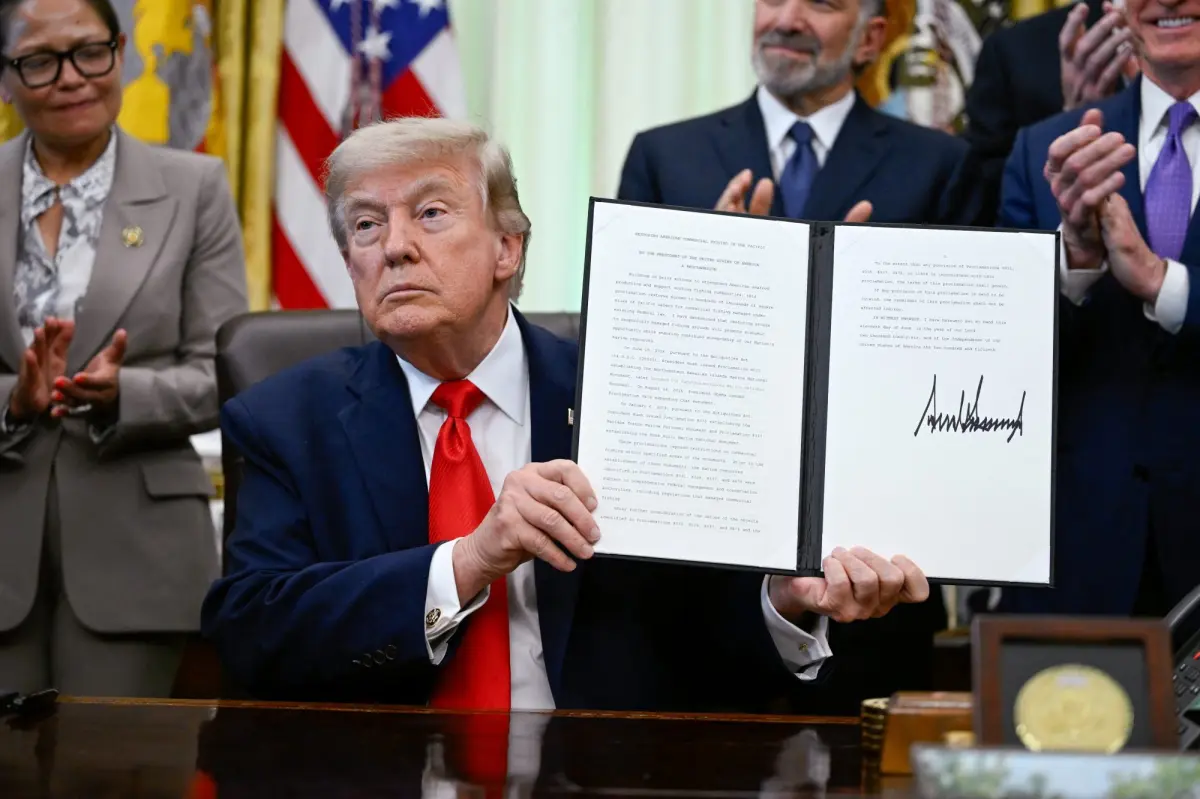
President Donald Trump has announced that Washington and Tehran have signed an agreement with two pillars: reopening the Strait of Hormuz and ensuring the Islamic Republic cannot develop a nuclear weapon.
Read more The still-mysterious Iran deal leaves a LOT of work undone — at best
While the details, including the sequencing of concessions such as sanctions relief, are yet to be publicized, the Iranian people remain absent from the agenda.
That is a problem.
The true path to lasting regional stability runs through the Iranian people — the regime’s primary existential threat and the Middle East’s largest anti-Islamist and most pro-American and pro-Israeli population.
Unsurprisingly, Tehran’s propaganda machine is already spinning the narrative, declaring victory and claiming it was able to “impose its will on” the United States.
But Washington’s failure to publicize the deal means many Iranians are hearing only the regime’s side of the story.
With restrictions from Iran’s longest internet blackout beginning to ease, Trump now has an opportunity to speak directly to the millions of Iranians who viewed the latest conflict as a campaign against their oppressors.
The Tehran regime has suffered a heavy blow, with numerous senior military figures eliminated and its missile infrastructure decimated.
The Islamic Republic’s supreme leader, Ali Khamenei, was killed on the first day of the latest conflict, and officials kept his funeral on hold for more than four months amid fears over the security situation.
The tyrant’s death marked a moment millions of Iranians, myself among them, had waited nearly four decades to celebrate.
As the news spread, anti-regime chants echoed from rooftops while men and women danced and set off fireworks in cities across the country, including Khamenei’s hometown of Mashhad.
Those of us in the diaspora rejoiced from afar.
Trump broke away from his predecessors when he spoke directly to the people of Iran on the first day of the conflict, saying “the hour of your freedom is at hand.”
Read more Iran could ‘access’ $300B for rebuilding under US deal — funded by Gulf states attacked by Tehran
“America is backing you with overwhelming strength and devastating force,” he added.
Trump and CENTCOM Commander Admiral Brad Cooper both reiterated that while it was not safe for Iranians to mobilize as military operations were ongoing, there would come “a clear signal” from Washington when it was time to “take control of your government.”
But that call never came.
So what happens now?
Even if Tehran holds up its end of the bargain and halts its attacks against the Strait of Hormuz, and even if the U.S. naval blockade is removed, it is still imperative for Iran not to get sanctions relief or repatriate its oil revenues.
Since the April ceasefire, the increasingly paranoid Islamic Republic has instituted hundreds of checkpoints that have become extrajudicial killing zones for ordinary Iranians, alongside public hangings of dissidents and mass arrests.
Any economic relief granted to the regime inevitably fuels its war against the Iranian people.
Washington must complement any deal with maximum support to the millions of Iranians the regime has held hostage.
That means satellite connectivity as a lasting solution to Tehran’s internet blackouts — critically needed to facilitate a messaging campaign to capitalize on the rising momentum against the regime’s repression apparatus.
The Islamic Republic and the Iranian people are not the same.
President Trump has said so in the past, and he is right.
Now is the time for him to remind Iranians that Washington still knows the difference.
Janatan Sayeh, born and raised in Tehran, is the Iran analyst at the Foundation for Defense of Democracies, focused on Iranian domestic affairs and the Islamic Republic’s regional malign influence.