How the song Dolly Parton chose for her funeral reflects her ability to transcend race, region and religion
Dolly Parton never forgot her humble Smoky Mountain origins. So no one should be surprised that she did not choose one of her own songs to be played at her funeral. Instead, she’s picked “If We Never Meet Again (This Side of Heaven),” a classic gospel song that’s been recorded by a range of other country greats, including Jerry Lee Lewis, the Chuck Wagon Gang and the Brown’s Ferry Four.
Read more At least 20 hikers missing as flash flood sweeps through Grand Canyon
Dolly undoubtedly just loved this moving song. The lyrics — “if we never meet again, this side of heaven, I’ll meet you on that beautiful shore” — no doubt reminded her of her late husband and parents. But her choice also reflects the role Dolly came to play as a unifying figure in a time of American cultural polarization.
The hymn she chose, and many others by its composer, have crossed the same cultural boundaries of race and region that Dolly herself learned to transcend as she went from backwoods to Broadway.
Albert Brumley, the composer of “If We Never Meet Again,” was born in Oklahoma’s Choctaw Nation area yet became a widely known composer of so-called white gospel music. Some of his best-loved hymns include “I’ll Meet You in the Morning,” “Turn Your Radio On” and “Rank Strangers.”
But the popularity of his hymns crossed racial boundaries. His classic “I’ll Fly Away” quickly became a staple of black gospel groups, including the Five Blind Boys of Mississippi, the Five Blind Boys of Alabama, the Pilgrim Jubilees and the Brooklyn Tabernacle Choir. It was recorded as a duet by none other than Aretha Franklin and Jesse Jackson. Brumley’s lyrics, from 1929, became a civil-rights anthem, demonstrating the unifying power of music.
“When the shadows of this life have gone away, I’ll fly away, like a bird from prison bars has flown, I’ll fly away.”
The hymn Dolly chose for her memorial service has even been recorded by the All for Christ Singers, a group that melds American gospel hymns with the indigenous music of Zimbabwe. One can only wonder what Brumley, who learned his craft at a little school for musicians in small-town Arkansas, would make of that. Dolly would likely cheer and shout amen!
Not surprisingly, Dolly herself sang “I’ll Fly Away” in concert. Her performances raised a crowd to its feet and got them shouting hallelujahs. That’s thanks to Dolly’s own unifying power. Her music was embraced by Americans of every stripe. Whitney Houston, a daughter of the black church, recorded unforgettable renditions of Dolly’s “I Will Always Love You.” When Houston won her 1994 Grammy for covering the song, it was Dolly who presented it to her.
Read more NYC actor dons two key things to win Mamdani lookalike face-off
The funeral songs chosen by other iconic Americans tell their own great stories. Martin Luther King Jr. chose Thomas Dorsey’s “Take My Hand, Precious Lord,” another spiritual that transcended race thanks to memorable recordings by Mahalia Jackson and Elvis Presley. Aretha Franklin was on the mic for the King’s funeral.
And at the Queen of Soul’s own funeral, Gladys Knight sang Paul Simon’s “Bridge Over Troubled Water,” itself inspired by a version of “Oh Mary, Don’t You Weep,” by one of America’s great black gospel quartets, the Swan Silvertones.
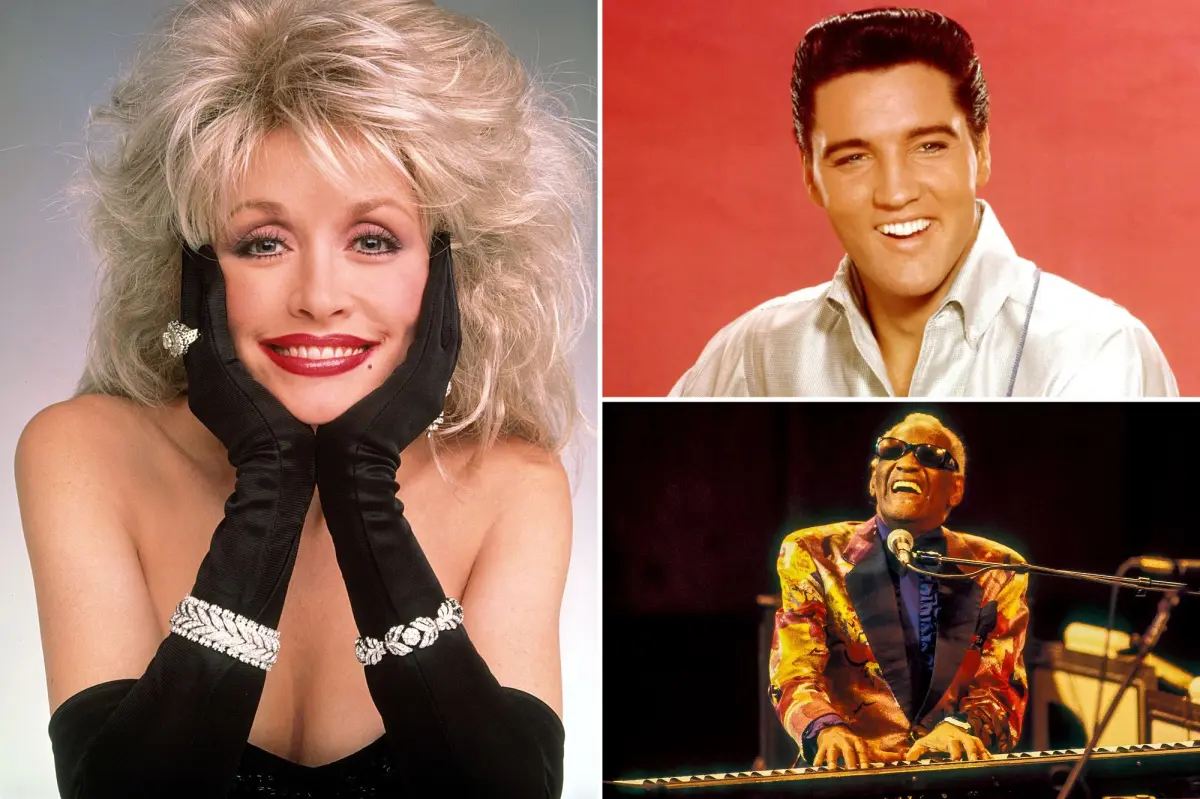
Dolly’s choice is thus another chapter in the broader story of what makes American music great: The cross-pollination of art from a hodgepodge of peoples. (Don’t call it cultural appropriation!) Few artists succeed in embodying the full range of American music as did Dolly. She’s up there with Ray Charles, who channeled black gospel music into the pop charts with such tunes as “I’ve Got a Woman.”
Charles also adapted one of his favorite genres, country music, for his own voice and style, as in “I Can’t Stop Loving You,” written by Tennessean Don Gibson. His gospel-tinged version of “America the Beautiful” — composed by New England’s Katharine Lee Bates — might as well be the definitive rendition. It’s not surprising that his unifying music was embraced by Dolly’s Grand Ole Opry.
The story of how America divided itself has become familiar and dispiriting — how we’ve split into cultural tranches that lack shared experiences and common understanding. The outpouring of adulation for Dolly Parton shows that we retain the capacity to come together when someone actually tries to bring us together. Dolly tried that very thing — and succeeded.
Howard Husock is a fellow at the American Enterprise Institute and author of “The Projects: A New History of Public Housing.”
Read more Odell Beckham makes Giants’ roster in full-circle moment