Don’t let the the UFT fleece taxpayers via teacher-aide bonuses
Mayor Zohran Mamdani and the City Council are going to war in court over payments to Department of Education paraprofessionals — even though they agreed on the issue not long ago.
Read more Are they Democrat socialists or just deadbeat scammers?
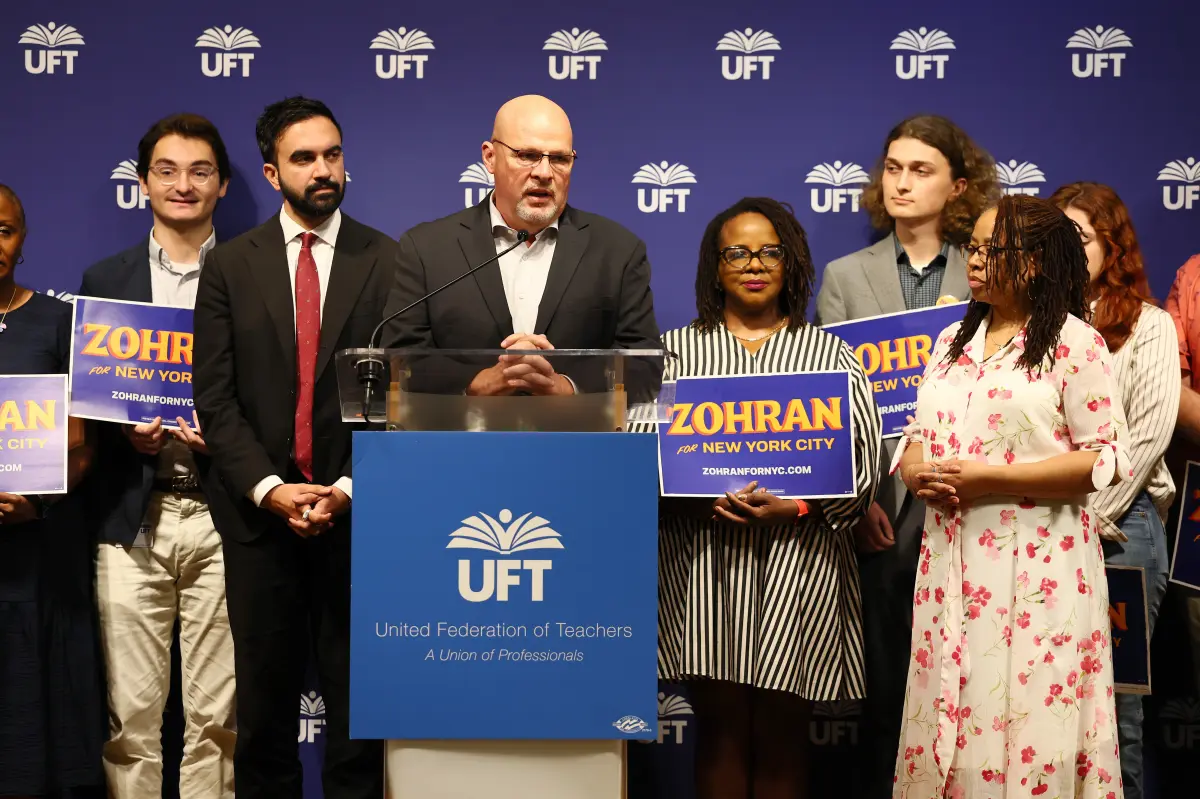
At a 2025 press conference where the 200,000-member teachers’ union endorsed him, Mamdani touted his support for giving paraprofessionals $10,000 checks.
Last month, the council unanimously passed the union-driven and branded “Respect for Paraprofessionals” bill, at an expected cost of $325 million.
Mamdani, however, didn’t sign or veto it but instead let it become law automatically, citing concerns about its legality. Hours later, his lawyers ran to court to block it.
Whether paraprofessionals deserve more pay isn’t the issue. Virtually everyone can agree that they do very difficult work, and a starting salary of about $33,000 doesn’t go far in the highest cost-of-living city in the nation.
What’s at stake goes to the heart of how the city hires and pays its employees.
Under the state Taylor Law, public employers and unions bargain collectively over wages, benefits and work rules. Collective bargaining is imperfect, but it’s the lawful process.
The United Federation of Teachers’ members, which includes both teachers and paraprofessionals, agreed in 2023 to a contract that did little to address paras’ low pay.
The 2023 contract, for example, cut the time for a teacher to earn a $100,000 salary from 15 to 8 years. But it didn’t revise the paraprofessionals’ pay scale.
UFT President Michael Mulgrew reasoned that paras could get more only if teachers took less — a tradeoff the union has declined.
Instead, it’s sought to strike a better deal for its large teacher membership and then separately have the council boost salaries for the paras.
The trouble is, in sidestepping collective bargaining, the new law threatens to open the door to multiple ways for unions to win pay hikes.
Once they finish bargaining with the mayor, they’ll run to the council and negotiate additional payments.
Neither side will want to appear stingier than the other, so the union is effectively trying to engineer a spending arms race — taxpayers and fiscal consequences be damned.
It was obviously irresponsible for Mamdani to back the legislation on the campaign trail; funny that his doubts about its legality didn’t surface then.
But the council should’ve known better than to upset the six decades of accepted labor practice.
That every member present voted for the bill shows the extent of UFT’s stranglehold over the city’s education system.
The council justifies the payment as helping fill 1,600 paraprofessional vacancies.
Students legally entitled to one-on-one support can wait months for the city to provide it, while the city pays far higher rates when it fails to provide them.
But the bonuses would hardly recruit many more aides.
Almost all of it would go to the roughly 25,000 paraprofessionals already employed, while any incentive to stay would vanish once the checks stop.
There are far better ways for the mayor and council to address the problem.
First, education officials should determine whether requests for paraprofessionals genuinely reflect student needs; standards should be consistent across the five boroughs.
In 2018, the city’s budget office reported that officials recommend paraprofessionals for students at rates that vary widely by borough; an aide for a Staten Island student with autism, for example, was nearly twice as likely to be recommended as one for the average student citywide.
Officials should also fix the broken process to hire paraprofessionals.
Candidates cannot simply apply; per DOE’s own careers page, applications “are only made available to people who have been nominated by a school principal.”
That means someone interested in the job must contact individual schools and find a principal willing to nominate them based on their staffing needs.
Everyone else may fill out an interest survey, but the DOE warns that “does not guarantee a nomination.”
And weeks before the new school year begins, nominations are closed, per the DOE’s website.
That means someone looking to become a paraprofessional cannot apply right now.
Nominees then go through assessments, fingerprinting, workshops and an exam before they become substitutes.
And after that, they must work at least 25 days and earn the required state certificate before becoming eligible for a full-time paraprofessional appointment.
The DOE should, at the least, let qualified candidates apply without first securing a principal’s nomination.
And when the UFT contract expires next year and Mamdani and Mulgrew resume collective bargaining, the two parties should address paraprofessionals’ salary.
The court will now decide whether paraprofessionals get the payout the council passed.
But even if they do, it’ll be just a Band-Aid that leaves the system still sorely in need of repair.
Read more Zelensky details rift with Ukraine’s dismissed Defense Minister Fedorov
Jennifer Weber and John Ketcham are fellows at the Manhattan Institute