Tommy John, Yankees great who had surgery named after him, dead at 83
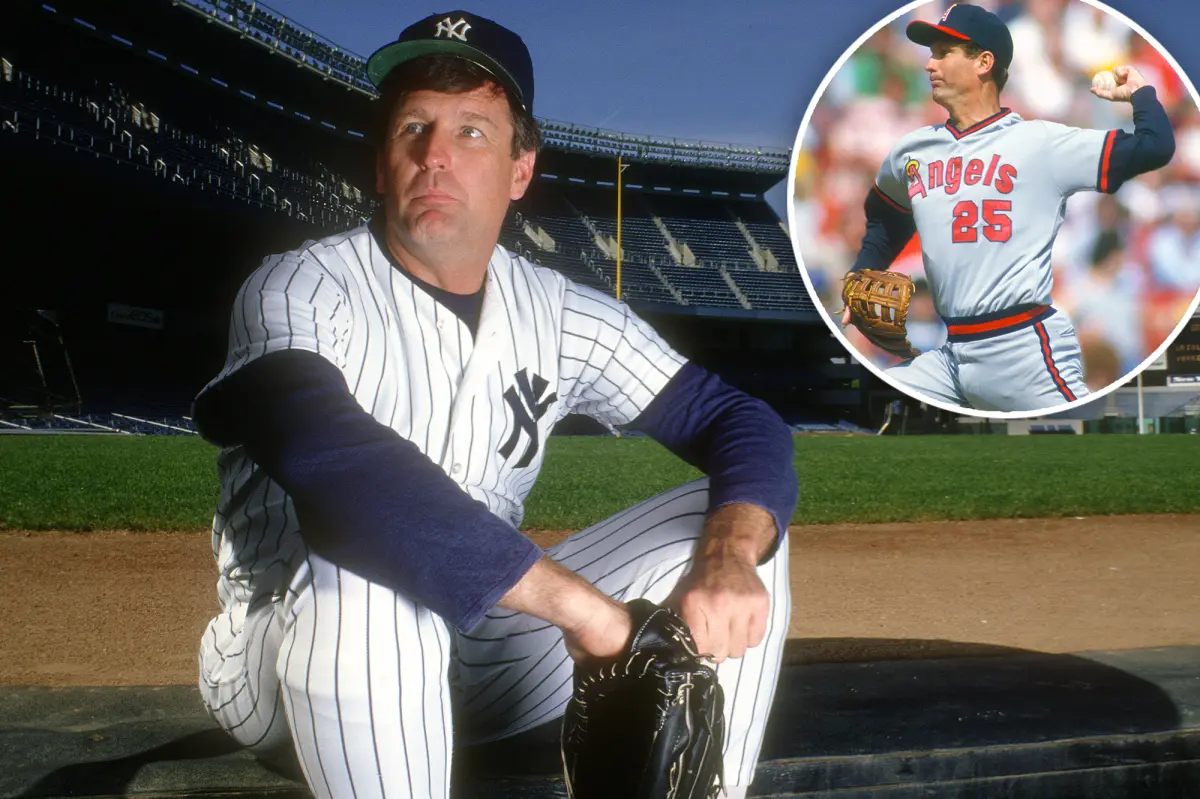
Tommy John, whose major league career was extended after he became the first player to undergo the elbow surgery that now carries his name, has died. He was 83.
Read more Indiana football star who jumped into raging river ID’d as latest victim of deadly Midwest floods
He had been in hospice care at his home in Bradenton, Fla.
The left-handed pitcher spent 26 seasons in the majors and won 288 games — 164 of which came after his elbow was famously repaired.
Only scandal-plagued Roger Clemens has more career victories in the Modern Era and isn’t in the Baseball Hall of Fame.
Already an All-Star pitcher with the White Sox earlier in his career, John was a standout starter with the Dodgers when he tore the ulnar collateral ligament in his left elbow during the 1974 season.
Team physician Dr. Frank Jobe replaced the ligament in the first surgery of its kind.
After missing all of 1975, John returned with Los Angeles a year later and quickly returned to top form.
In 1977, John finished second in the National League Cy Young voting.
In a farewell letter published online on Aug. 8 during Old-Timers’ Day at Yankee Stadium, John thanked Jobe, whom John said “saved my arm and made it possible for me to continue pitching. That surgery has since gone on to save the careers of countless pitchers, including many of the very best in the game today.”
John was born in Terre Haute, Indiana on May 22, 1943 and graduated from Gerstmeyer High School. Despite scholarship offers to play college basketball, John signed with Cleveland as an amateur free agent out of high school and made his MLB debut with the then-Indians in 1963, when he was 20.
John was traded to the White Sox prior to the 1965 season and was an All-Star in 1968.
He spent seven seasons with Chicago before the Dodgers acquired him in December 1971 in exchange for Hall of Famer Dick Allen.
John started three World Series games against the Yankees — one in 1977 and two in ‘78 — before signing with the Yankees as a free agent before the 1979 season.
In each of his first two years in The Bronx, John topped 20 wins. He finished second in the AL Cy Young vote in 1979 and fourth in 1980.
“It was great having him on the team,’’ Ron Guidry said of his former teammate at Old-Timers’ Day. “He was so knowledgeable. When we were together, we were pretty much 1-2 on the staff and having him around gave me great comfort. He could talk and it was nice to have him around because he would answer any question you had and he did so much in the game.”
The Yankees traded John to the California Angels in August 1982 and John stayed with the Angels until he was released midway through the 1985 season, when he signed with the Oakland A’s.
He returned to the Yankees in 1986 and finished his career in The Bronx, making his final start in May 1989, when he had just turned 46.
By then, John was the oldest player in the sport and had tied Deacon McGuire’s record for most seasons pitched (26) — a mark that was broken by Nolan Ryan, who played 27 seasons.
John started 700 games in his career, the eighth-most in MLB history and his 4710 ⅓ innings pitched is 19th on the all-time list.
Read more Cristiano Ronaldo drops retirement bombshell after World Cup heartbreak
But John really made his mark with his comeback from elbow surgery.
He suffered the injury at 31 in a start against the Montreal Expos on July 17, 1974.
John threw a pitch to Hal Breeden and later said he felt the “strangest sensation I had ever known…Right at the point where I put force on the pitch, the point where my arm is back and bent, something happened. It felt as if I had left my arm someplace else. It was as if my body continued to go forward and my left arm had just flown out to right field, independent of the rest of me.”
He threw one more pitch before being removed from the game before being removed by manager Walt Alston.
When the injury didn’t heal on its own, Dr. Jobe recommended the groundbreaking surgery to John.
While others had undergone similar procedures on their wrists and hands, John was the first pitcher to have it done on his elbow, as Jobe replaced that ligament with a tendon from John’s right forearm that September.
“I couldn’t pitch anymore,’’ John told The Post of the injury in 2019. “And I wanted to pitch and make a living playing baseball. If I didn’t have the surgery, I wouldn’t have been able to continue playing the game.”
While grateful, John lamented the fact that the procedure became so common, especially among younger pitchers.
Gerrit Cole, who underwent the procedure in 2025, said, “It’s weird to think about the surgery saving us, but the player had to step up to the table and do it. He had tremendous success afterwards. He was really writing the book for all of us. There’s a lot of gratitude towards him.”
Upon his comeback at the start of the 1976 season, John was referred to as “The Bionic Man.”
After signing with the Yankees, John pitched one postseason game in 1980 and helped them get back to the World Series in 1981, where he gave up just one run in 13 innings over three appearances, but they fell to the Dodgers.
John led the league in shutouts in 1966 and ‘67 with the White Sox and again in 1980 with the Yankees.
Despite his success and longevity, John never came close to being elected to the Baseball Hall of Fame.
While with the Yankees, John’s family survived a near-tragedy, as John’s 2-year-old son, Travis, survived a fall from a third-story window that left him critically injured.
In 2010, John’s son Taylor died by suicide and John worked with the American Foundation of Suicide Prevention.
John’s other jobs in baseball included broadcasting with the Yankees and Twins, as well as managing in the minors — including with the Staten Island Yankees in 2004.
Read more Bengals rookie Ceyair Wright bolts camp for big movie role
John had previously been diagnosed with bladder cancer.