First case of untreatable, potentially fatal Bourbon virus confirmed in New York
For the first time, a rare tick-borne infection has been confirmed in New York.
Michael Larkin, 67, was working outdoors in Suffolk County when he was bitten by two lone star ticks, infecting him with the Bourbon virus.
There is no vaccine to prevent this disease, no commercial test to identify it — and no treatments for it.
Its symptoms are similar to other tick-borne illnesses, like Lyme disease. Plus, because it’s so rare, doctors may misidentify it, as they did in Larkin’s case.
Larkin was treated with an antibiotic, which is appropriate for Lyme disease, but that let the Bourbon virus run wild. He developed a rash, fever, night sweats and debilitating headaches.
Other symptoms can include fatigue, rash, body aches, nausea and vomiting.
He spent five days in the hospital before making a full recovery. But others haven’t been so lucky.
Very few cases have been confirmed even across Kansas, Oklahoma and Missouri, where the virus is more prevalent — averaging less than one case per year.
Two of those cases have ended in death.
“Now we know the virus can be lethal. On Long Island, at least, we have a lot of lone star ticks,” Dr. Luis Marcos, who treated Larkin, told CBS News. “And honestly this may be the very, very tip of the iceberg.”
‘Likely more prevalent than we think’
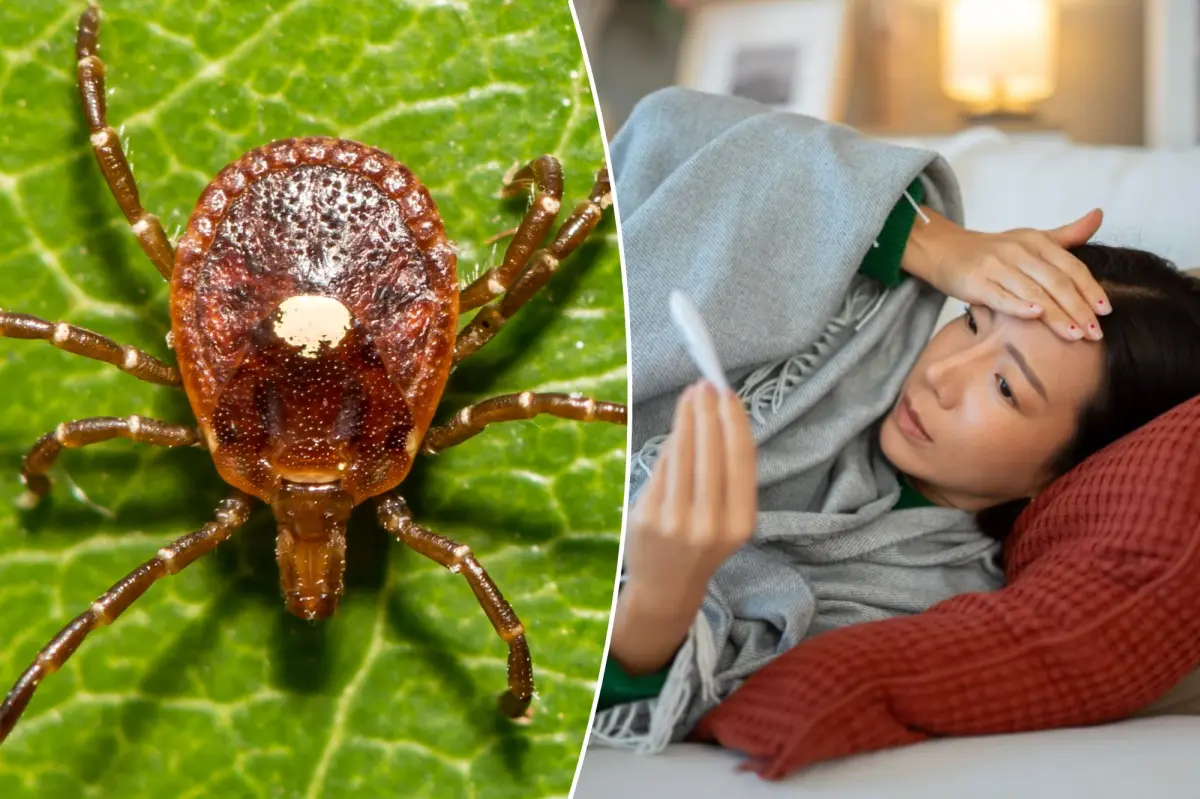
Bourbon virus, named for the county in Kansas where the disease was first identified, is carried by lone star ticks.
These aggressive ticks have a white dot or “lone star” on their back. They’re found in wooded areas, tall grass and brush.
Just as the Bourbon virus relies on lone star ticks to spread, lone star ticks rely on white-tailed deer.
These deer have exploded in population and live beside humans. Their natural predators have been eliminated, and they love to hang out in suburban yards.
Read more ‘Hammer of the Gods’ new secret weapon upgrades US Army power to blast enemy missile attacks
More deer means more ticks. Plus, milder winters and longer warm seasons mean ticks are out longer and going farther north.
Lone star ticks can also trigger alpha-gal syndrome, which can cause a lifelong meat and dairy allergy. They can also spread ehrlichiosis, a bacterial infection with flu-like symptoms.
“There are a lot of lone start ticks in New York and in the Northeast, we have dense populations,” Marcos said in a press release.
Larkin was actually infected with the Bourbon virus in 2021. It took five years for the diagnosis to be confirmed with specialized tests. It begs the question: how many more have been infected in the area since?
“The Bourbon virus is likely more prevalent than we think in our region and other cases are likely not being diagnosed,” Marcos said.
That indicates a major need for better surveillance and testing and better guidance for doctors, Marcos and his team said.
If patients need to be hospitalized, doctors will likely have to treat symptoms, using IV fluids for dehydration and meds for pain and fever.
“Without identifying the cause of an infection, the chances of developing accurate diagnostic tests or effective treatments are minimal,” Marcos said. “That is why it is so important to first understand the true impact of the virus in high-risk areas.”
To protect yourself from tick bites, avoid grassy, brushy and wooded areas. Stay in the center of trails when you’re in the woods.
You can also treat your clothes with 0.5% permethrin and EPA-registered insect repellents like DEET.

Related Posts

‘Explosive diarrhea’ parasite sufferers detail horrific realities of infection: ‘Pure water coming out of you’

Baby not eating? Spitting up? The feeding red flags to watch for — and what’s actually normal