Exclusive | US lawmakers seek national security probe of Chinese chip giant CXMT after blockbuster IPO: ‘Ticking time bomb’
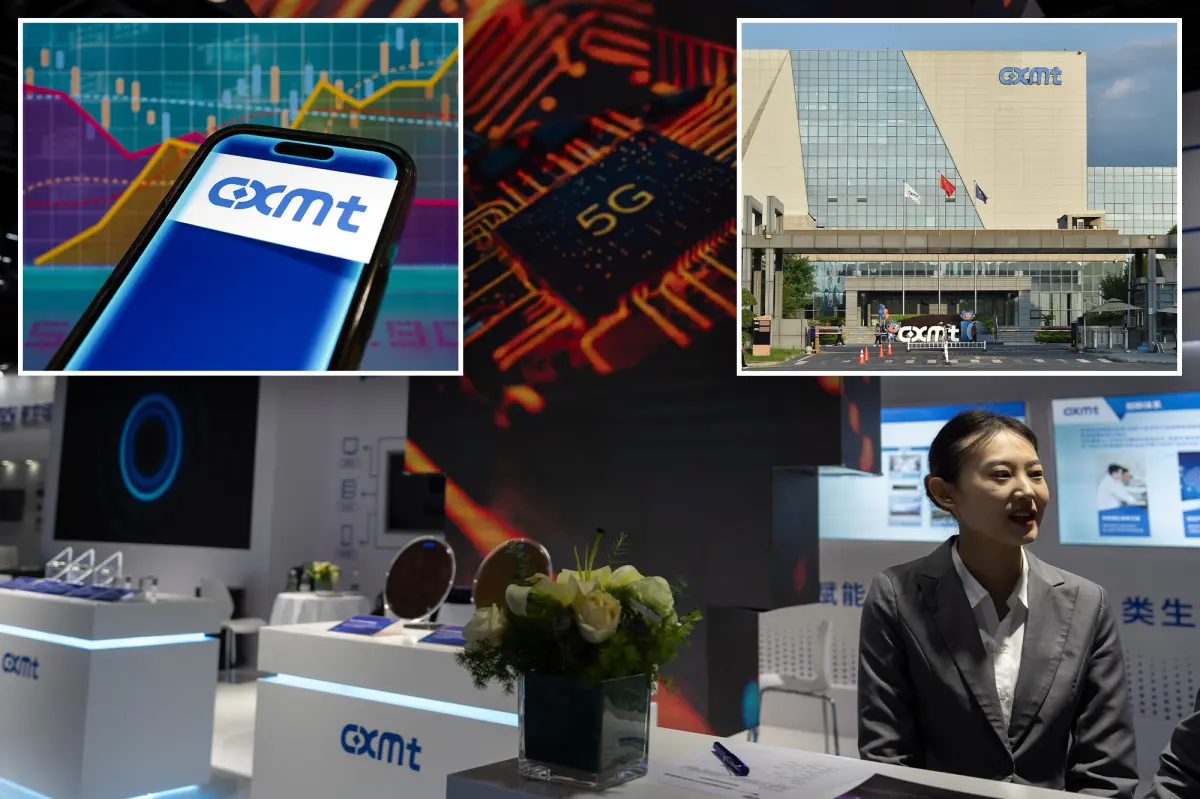
Top US lawmakers want the Trump administration to launch a formal national security probe into Chinese memory chipmaker CXMT on suspicions that Beijing orchestrated the company’s blockbuster IPO to prop up a key military asset, The Post has learned.
Read more Gavin Newsom’s ex-mistress drops bombshell essay on affair that nearly destroyed the governor
Shares for the China-based chipmaker, also known as ChangXin Memory Technologies, skyrocketed 466% in Shanghai trading on Monday — raising $8.6 billion and instantly making the firm the most valuable on a China mainland exchange with a market capitalization of nearly $500 billion.
Beijing’s historic windfall — which sent shares of US chipmakers tumbling on competition fears on Monday — is setting off alarm bells in Washington, with a bipartisan group of at least a half-dozen members of Congress expected to send letters to the Trump administration in the coming days, sources close to the situation told The Post.
One senior US official told The Post there is “a real suspicion that a Chinese Communist Party intervention played a role in this so-called IPO” just six weeks after the Pentagon designated the firm as a Chinese military company.
“CXMT just got a massive cash infusion that will send shivers down the spines of the US intelligence community,” the source said.
A seprate senior US government source described the chipmaker as being deeply embedded in “the Chinese industrial military complex,” calling its rapid market expansion “a ticking time bomb for national security.”
The Post has also learned that Congressional leaders from the House and Senate, known as the Gang of 8, are demanding an urgent classified briefing to assess the full scope of Beijing’s involvement in the company.
The Pentagon formally added CXMT to its list of Chinese military companies operating in the U.S. on June 8, but has so far stopped short of blacklisting it altogether.
A company qualifies for the list it is “engaged in providing commercial services, manufacturing, producing or exporting” and is either “directly or indirectly owned, controlled by, or acting as an agent of various Chinese government entities” or “identified as a “military-civil fusion contributor to the Chinese defense industrial base.”
The push for a formal investigation would likely be tucked into the National Defense Authorization Act, the must-pass annual legislation that sets the Pentagon’s budget, dictates defense strategy, and serves as Washington’s primary legislative weapon for countering a rising China.
The fear is that Chinese microchips embedded in everyday consumer electronics could act as a Trojan horse, quietly infiltrating American military supply chains and exposing critical defense systems to foreign espionage or cyber sabotage during a crisis, sources said.
CXMT’s massive stock market debut highlights Beijing’s aggressive push to build a homegrown tech empire capable of surviving Western sanctions.
The Wall Street Journal reported earlier this month at Apple has been lobbying the US government to buy chips from the company owing to a shortage amid the ongoing AI boom.
The IPO instantly made the firm the most valuable company on a mainland exchange, pumping its estimated market value to a staggering 3.3 trillion yuan, or more than $487 billion.
As China’s top memory chipmaker, CXMT is cashing in on the global artificial intelligence boom. The company specializes in DRAM chip, which are the essential memory components that power everything from consumer smartphones and electric vehicles to AI data centers and advanced military hardware.
The IPO arrives at a critical moment in the escalating tech war between Washington and Beijing.
Uncle Sam has spent the last several years trying to choke off China’s technological rise, using strict export controls and diplomatic pressure to block Chinese firms from buying the advanced Western machines needed to build the world’s most cutting-edge microchips.
In response, the Chinese government has poured state support into national tech champions like CXMT. Beijing’s ultimate goal is complete tech independence: ensuring both its domestic economy and its military machinery can run completely free of US supply chains.
While CXMT is still trying to catch up to industry heavyweights in South Korea and the US on top-tier tech, it has already carved out a massive global footprint by churning out older “legacy” chips.
Because these basic, foundational chips face fewer international restrictions, CXMT has rapidly expanded its market share, creating a massive strategic vulnerability for the West as Chinese technology bakes itself into global supply chains.
The Post has sought comment from the Pentagon and CXMT.

Related Posts

Cracker Barrel CEO Julie Felss Masino steps down after ‘woke’ rebrand sparked backlash from customers — and even Trump

Mamdani’s muni bond problem is slowly worsening — here’s how it could come to a head