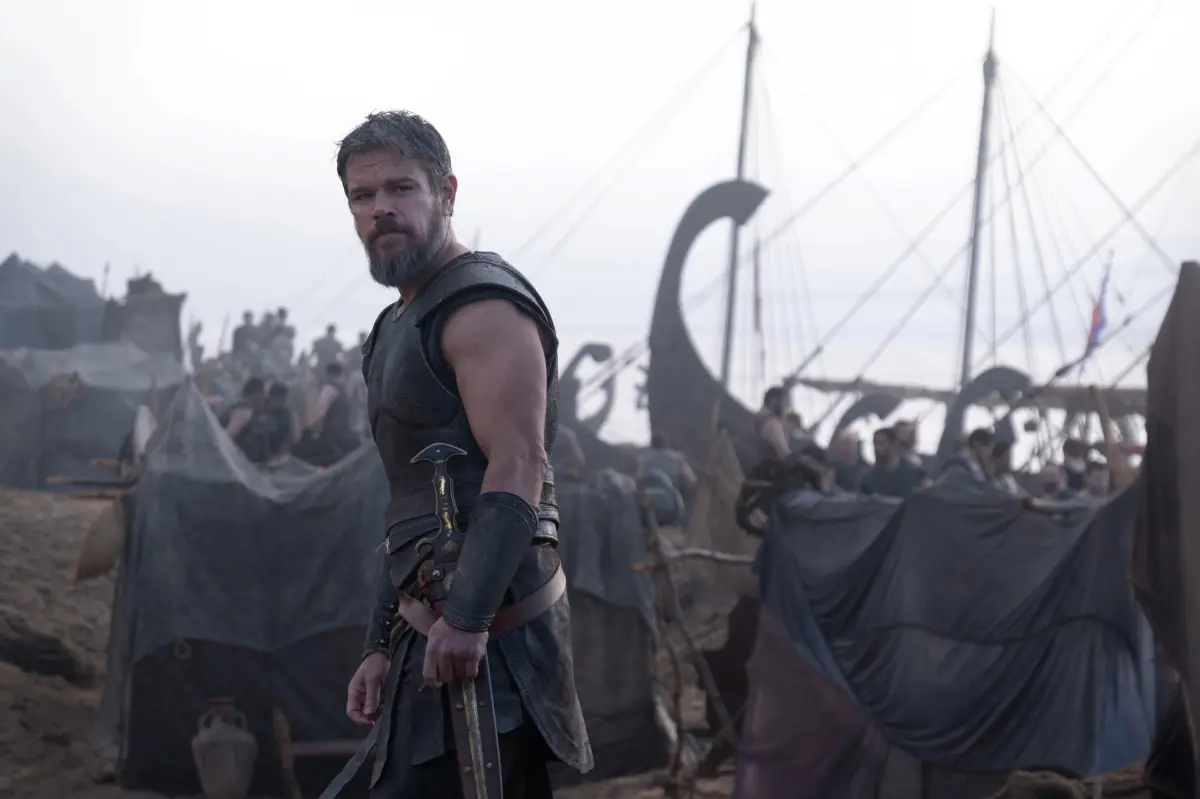
Box office success of ‘The Odyssey’ proves audiences crave classics — not woke Hollywood nonsense
As “The Odyssey” shatters box-office expectations, maybe “woke” Hollywood will learn something from the film’s success: Audiences want familiar stories, told in entertaining ways.
Christopher Nolan’s star-studded retelling of the Greek epic beat expectations, pulling in $264.1 million on its first weekend in theaters worldwide, and $124.5 million in the United States alone.
Around the country, theaters were packed for the first time in years; seats for the IMAX version were near-impossible to find, except in the wee hours of the morning.
Before the film’s release, the buzz in some conservative circles was negative because Nolan had transgender Elliot Page play a Greek warrior, among other “non-traditional” castings.
In the end, however, all skeptics were blown away by the film’s sheer power — the kind of story that Hollywood has forgotten how to tell in recent decades.
Homer’s “Odyssey” is about a Greek king, Odysseus, lost on his way home from victory in the Trojan War. He endures many trials, even losing his memory for several years.
Meanwhile, at home in Ithaca, a mob of suitors gathers nightly in Odysseus’ castle to quaff his wine and woo his wife, the queen Penelope, hoping she will give her husband up for dead.
The story of the Odyssey is about the perils of defying the gods. It is a story about revenge. It is a story about the power of love.
Read more ESPN lays off NFL analyst Ryan Clark in stunning move as first wave of expected cuts begins
And ultimately, it is a story about the importance of home.
Nolan adds an extra layer of meaning by portraying Odysseus as wracked with guilt about the Trojan Horse, and the duplicitous means with which the Greeks defeated the proud Trojans (a story actually told in Latin in Virgil’s “Aeneid,” not in Homer’s works).
For some critics, Nolan’s interpretation went too far, imposing modern squeamishness about war onto an ancient story.
But that criticism reveals why the film is so ennobling. It provokes debate about fundamental principles.
That has always been one purpose of studying the classics: Their lessons remain relevant to the moral dilemmas we face today.
The film is also visually arresting, with career-defining performances from Matt Damon and Anne Hathaway.
This is what audiences want.
Not “woke” melodramas that turn into social justice preaching sessions, but films that explore universal human ideas while also entertaining and amazing us.
Read more Trump hits Canada with surprise 50% tariffs — and he didn’t warn Carney during their World Cup talk
That’s how you start to save Hollywood.

Related Posts

NYC’s AI in schools policy is first step in prying children away from the grips of Big Tech — it may come just in time
Mamdani’s ‘equity’ crusade blinds us to child abuse — endangering NYC’s kids